Introducing Concierge and Single-Window Service

Every year, the World Bank and International Finance Corporation survey businessmen across 190countries on the topic “Ease of Doing Business”.

Liveable cities

Published on March 24, 2018

Every year, the World Bank and International Finance Corporation survey businessmen across 190countries on the topic “Ease of Doing Business”. The Doing Business report focuses on 10 common steps which entrepreneurs have to go through in their business life-cycle : Starting a Business (e.g., incorporation), Registering Property, Dealing with Construction Permits, Getting Electricity, Protecting Minority Investors, Getting Credit, Paying Taxes, Trading Across Borders (e.g., importing and exporting), Enforcing Contracts (e.g., going through courts), and Resolving Insolvency (e.g., closing a business).

The survey focuses on the number of steps and days it takes for a small or medium-scale business to go through each procedure. Countries which require fewer steps and less days rank higher than countries which consume more of your days and time. New Zealand is currently ranked No. 1 in the world while the Philippines is No. 113.

For the Philippines, the key problem lies in processes that are largely manualized. That’s because these processes were designed and put in place long before computers came into common use. They have, unfortunately, persisted long after computers came into use. A second key problem is that some processes were embodied in laws. Since these laws have not been amended or repealed, manual processes have remained in force. Finally, a third key challenge is that we have two layers of business permitting : the national government and local governments. To compound this challenge, local government rules differ from one city to another.

The National Competitiveness Council, through its Ease of Doing Business Task Force, has been working on introducing reforms to cut the days and speed up time for obtaining licenses and permits across the 10 indicators outlined above. One example of their work has been in the local government processes being undertaken by Quezon City, the city being studied by World Bank-IFC for the Ease of Doing Business report for the Philippines. Typically, only one city is studied per country.

Two particular processes in Quezon City have received a recent makeover : Business Permits and Construction Permits. The makeover hinges on a change in the philosophy and design of the offices issuing those permits. In the past, so-called One-Stop Shops were actually an array of desks representing different offices all placed in a single room so that all applicants had to do was go desk to desk to obtain a permit instead of going office to office. In reality, they were just really visiting different offices (albeit in the same room) and having to queue per desk.

Introducing the Concierge or Single-Window Service. In today’s new One-Stop Shop, the desks are still there but applicants no longer have to move from desk to desk. One merely has to take a computer-generated number and wait for his or her number to be called. Once called, all you have to do is submit all your papers and documents to a single window teller. A “concierge” will assist you. Your papers will then be moved through an assembly line of processors while you wait in comfort, oftentimes seated in air-conditioned lounges, until your number is called to receive your assessment. If an application and assessment is complicated as, say in Construction Permits, you will be given an appointment in a few days’ time to pick up the assessment.  Once you pay, your license or permit will be released. It’s now as easy as 1-2-3 : submit documents, receive assessment, and pay. Your papers do the walking while you wait.

The new Concierge or One-Window Service is now available in Quezon City thanks to efforts from Mayor Herbert Bautista and his team working in partnership with the NCC, Department of Trade and Industry (DTI), Department of Interior and Local Government (DILG), and the Bureau of Fire Protection (BFP). Incidentally, this is a concept being practiced in other cities as well. We’re hoping it gains traction across more cities nationwide.


Guillermo M. Luz (gm.luz@competitive.org.ph) is Private Sector Co-Chairman of the National Competitiveness Council.

Design Sprints

Have you ever been frustrated by the manual process of filing for any government permit ? You usually have to fill out multiple forms, line up in various offices or even commute from one office to another, and wait for some time.

Liveable cities

Published on June 30, 2018

Have you ever been frustrated by the manual process of filing for any government permit ? You usually have to fill out multiple forms, line up in various offices or even commute from one office to another, and wait for some time.

One of the challenges we’ve faced in the Ease of Doing Business project was developing technology solutions quickly. For a variety of reasons, we couldn’t get government agencies to move fast enough. Procurement processes took too long or procedures for obtaining licenses and permits could not be simplified. In the meantime, entrepreneurs and investors suffered through the manual procedures.

We’re now attempting to change that process and radically speed things up. Last year, the National Competitiveness Council, with the support of the New Zealand Embassy and G2G (a New Zealand agency), worked with a firm called Creative HQ to scope out the problems businessmen face in applying for their licenses and permits. After a series of workshops and interviews with entrepreneurs and government officials in Manila, Cebu, and Davao, we zeroed in on three processes to fix in an effort to make doing business easier in the Philippines. We also decided to use a method called “Design Sprints” develop solutions.

Design Sprints originated at Google Ventures as a way of focusing on developing products. It has been used by technology start-ups, large corporations, and governments.

As the name suggests, a Design Sprint is run extremely fast over a short burst of time. In five days, a multidisciplinary team of seven people, assisted by facilitators, will Map, Sketch, Decide, Prototype, and Test a solution. The main purpose is develop a realistic prototype to address a particular problem.

This 5-day workshop is an intense and intensive exercise. Design Sprints use a highly-structured format for rapid prototyping through problem discovery and collaborative design and, most importantly, testing and validation with a target audience of end-users.

The Department of Trade and Industry (DTI) has now contracted Creative HQ to conduct Design Sprints to address three specific problems. Our goal is to create customer-centric solutions which can be prototyped and tested before some customers.

Design Sprint No. 1’s (July 23 – 27) goal is to develop a “wiki” on LGUs. For many entrepreneurs, finding out regulations per city or municipality can be like looking for needles in a haystack. This Sprint will create a portal containing the regulations and application processes of LGUs. As simple as that sounds, it hasn’t been done yet. Imagine the convenience that creates for businessmen when they can go through local applications online for any LGU.

Design Sprint 2’s (Sept 3 – 7) goal is to create a Philippine Business Number or PHBN. This single number will be used as a reference number for tagging all other numbers we receive from every agency we interact with. For instance, we receive different numbers from agencies like the SEC, BIR, SSS, Philhealth, Pag-IBIG, DTI, City Hall. PHBN will link these together so it becomes easy to trace records. This will, we hope, eventually remove the need for businessmen to carry so many papers to government offices to prove their existence when it comes to submitting applications. Over time, maybe government will only issue one number – a national ID for businesses.

Design Sprint 3’s (October 1 – 5) goal is to simplify the business registration or incorporation process. Today, it takes 16 steps and at least one month to incorporate a new company. The SEC’s new automated system, Corporate Registration System, can sometimes take longer according to some investors we’ve talked to. Many countries have used technology and process simplification to cut down that entire process of business registration to about an hour.

If you’d like to join Design Sprints to radically improve these processes, please don’t hesitate to send us an email.


Guillermo M. Luz (gm.luz@competitive.org.ph) served as Private Sector Co-Chairman of the National Competitiveness Council from 2011 to 2018.

Who are the Most Competitive Cities and Municipalities?

At the National Competitiveness Council, we believe that city and municipality competitiveness is a key building block for national competitiveness. We also believe that with over 100 million people across 7,000 islands, it is important to create more economic engines in the form of LGUs to drive long-term economic growth and development. Building these economic engines will disperse investment and job opportunities and spur inclusive growth.

Liveable cities

Published on August 26, 2017

At the National Competitiveness Council, we believe that city and municipality competitiveness is a key building block for national competitiveness. We also believe that with over 100 million people across 7,000 islands, it is important to create more economic engines in the form of LGUs to drive long-term economic growth and development. Building these economic engines will disperse investment and job opportunities and spur inclusive growth. It will also spread risk for companies looking for new business locations and create a better investment environment for the country as a whole because there would now be more options available.

Our problem was that we couldn’t easily identify which cities would likely be good candidates as their growth engines. Moreover, cities themselves could not tell how they compared against others or if their competitive positions were improving or not over time. So, in 2012, we conceptualized the Cities/Municipalities Competitiveness Index and started organizing 17 Regional Competitiveness Committees across the nation to oversee a review.

Our goal was to measure all cities and municipalities (the Philippines has 1,634) annually and to eventually institutionalize and embed this data-gathering and analysis in cities so they could use their own data to plan their futures. Following an initial set of discussions with industry experts and academe, we worked jointly with our Regional Competitiveness Committees to draw up a list of indicators which would measure the competitiveness of cities and municipalities.

The criteria were initially categorized in three broad pillars – Economic Dynamism, Government Efficiency, and Infrastructure – for a total of 30 indicators. At first, not all data were readily available because records were not well maintained. Many cities had difficulty submitting data for measurement. Nonetheless, a total of 285 cities and municipalities entered the Index in the project’s first year and we announced our first ranking report in 2013. Since then, we have made some adjustments in the indicators to focus on readily-available data and added a fourth pillar – Resilience – because this had become increasingly important for cities and municipalities in the age of climate change.

Last week, we announced the winners of our fifth annual Cities/Municipalities Competitiveness Index awards. From a modest start of 285 local government units in 2013, we now have 1,487 cities and municipalities or over 90 percent of the country covered. The awarding has become a much-anticipated event by Mayors and City Administrators and 2,000 people attended the awards ceremony on August 16 at the Philippine International Convention Center. When we first started, many people doubted that Mayors would want their cities to participate and be measured. But we argued that those who understood competitiveness would realize that the more competitive they are, the easier it would be for them to attract investments and generate jobs. They also realized that the more they measured their city, the more effective they would be as executives and managers. Today, it is not unusual for me to meet a Mayor who introduces his city by rank in our Cities/Municipalities Competitiveness Index (CMCI).

The CMCI is a great project for a number of reasons. First, it is large-scale data-gathering and measurement exercise of LGUs undertaken by the private sector, government agencies, academe, and the LGUs themselves. The data and results generated by the award have become a benchmark for  government agencies and investors to more closely monitor cities and make decisions, whether for budgeting or investing. Second, there is obvious pride in winning. LGUs send as many as 30 people on stage to receive their awards. Third, the private sector is heavily involved, not only in data-gathering but also in giving out the awards, underscoring the fact that they are truly in search of competitive cities.

The old adage that “what gets measured, gets managed” rings true for cities in the Philippines. Local competitiveness will lead to better delivery of services and economic development in cities – the building blocks of nations.

Full results are available on www.cmcindex.org.ph.


Guillermo M. Luz (gm.luz@competitive.org.ph) is the Private Sector Co-Chairman of the National Competitiveness Council.

eGov : the ultimate in ease of doing business

Earlier this week, the World Bank-IFC released its 14th edition of the annual Ease of Doing Business Report. This report compares business regulations and processes in 190 economies around the world and measures 10 basic steps involved in a typical life cycle of a business enterprise. Data is collected every first half of the year with a data cut-off date of May 31.

Liveable cities

Published on October 29, 2016

Earlier this week, the World Bank-IFC released its 14th edition of the annual Ease of Doing Business Report. This report compares business regulations and processes in 190 economies around the world and measures 10 basic steps involved in a typical life cycle of a business enterprise. Data is collected every first half of the year with a data cut-off date of May 31.

For this year’s report, the Philippines moved up four positions from No. 103 last year to No. 99 this year. In ASEAN, five countries (including the Philippines) moved up, including Indonesia, Brunei, Vietnam, and Thailand. Five countries also slipped : Lao PDR, Malaysia, Cambodia, Myanmar, and Singapore (though in Singapore’s case, they dropped only from No. 1 to No. 2). We live in one of the most competitive regions in the world.

Of the 10 indicators measured in the report, the Philippines improved in areas such as Protecting Minority Investors (up 18 from No. 155 to No. 137), Dealing with Construction Permits (up 14 from no. 99 to No. 85), Paying Taxes and social services (up 11 from No. 126 to No. 115), and Enforcing Contracts in court (up 4 from No. 140 to No. 136). These are not significantly large improvements but they are nonetheless movements in right direction.

On the other hand, we dropped in four indicators : Getting Credit (from No. 109 to No. 118), Starting a Business (from No. 165 to No. 171), Getting Electricity (from No. 19 to No. 22), and Resolving Insolvency (from No. 53 to No. 56).

In order to make a huge improvement in these rankings, we will need to do three things in the coming months. The first is to continue to streamline and simplify processes, something that has been ongoing for some years now, hence the 49 country jump in six years. The second is to legislate amendments to some existing laws and to create new laws to support ease of doing business. These are currently pending in Congress. And the third is to take more government procedures online.

The typical process for filing for a permit or license is manual. We manually fill out forms, often entering the same data on different forms. These forms are usually submitted over-the-counter at some office (in many cases, multiple offices in different locations) and then manually processed. Before processing, you are usually asked to submit supporting documents to verify or validate your application – more paper ! The release of the license or permit is also done over-the-counter. The whole process is tedious, takes too much time, and entails too much cost. Though it has never been measured, it probably contributes to the traffic as people need to move from office to office to obtain licenses and permits or make payments to government offices.

The obvious solution should be to apply technology and take more of these services online. Our national goal should be to enable people to file anything from anywhere, anytime. It should also enable us to pay for these licenses and permits by whatever means is available – online payments, credit cards, mobile money. And we should be able to get our licenses and permits sent to us online so we do not have to go to an office to pick them up. This should work like purchasing an airline ticket over the internet today.

Fortunately, such a system is being contemplated today by the newly-formed DICT working with DTI, DOF, DILG and other agencies. It will take some time to fully roll out such a system but much has already been done to create the underlying technology platform that will make all these applications possible.

The key is that people should continuously clamor for these programs and contribute ideas to make them more user-friendly and practical. It is only by moving into “eGov” when we will see the Ease of Doing Business a reality.


Guillermo M. Luz (gm.luz@competitive.org.ph) is the Private Sector Co-Chairman of the National Competitiveness Council

Building Blocks for Competitiveness in 2017

Over the last six years, we have tracked the country’s competitiveness ranking across a series of global competitiveness reports to see how we compare against other countries.

Liveable cities

Published on December 31, 2016

Over the last six years, we have tracked the country’s competitiveness ranking across a series of global competitiveness reports to see how we compare against other countries. These reports range from well-known ones like the World Economic Forum’s Global Competitiveness Index, the World Bank-IFC’s Ease of Doing Business Report, Transparency International’s Corruption Perceptions Index, and the Heritage Foundation’s Economic Freedom Index to the less well-known like the Failed States Index and Logistics Performance Index.

When many of these reports were first established, some of them as far back as the 1990s, the Philippines ranked deep in the bottom 20% of world rankings. Even as recently as 2011, we ranked in the bottom 30% of virtually all major reports, with the only exception I know being the Gender Gap Report (where we currently rank 7th in the world).  Our modest goal in 2011 was to move the country into the top-third of world tables.

Looking back at our performance and the annual data releases, we have indeed improved – but we haven’t made it into the top-third yet. We have managed, though, to get out of the bottom 30% and move into the middle-third for most of these indices.  Our performance in 2016 indicates continuous improvement across most indices, though not all.

Being more competitive essentially makes the country more attractive for investments and new business generation. Most countries which rank higher than us in the region generate much more direct investments than we do, sometimes five or six times as much.

In order for us to create a business-friendly environment, we need to focus on a number of themes: process improvement, local governments, and regulatory reforms, among others. We are basically trying to build a competitive structure on these foundations.

In the area of process improvement, our Ease of Doing Business project works with agencies to smoothen out business transactions with government such as incorporation, land registry, obtaining permits, and other common business transactions. Our goal is to simplify and streamline these procedures and to eventually automate them so people can transact with government online. Anybody who has had to obtain a permit knows how much trouble and inconvenience any process has been. We need to automate. Working with new agencies such as DICT and others, we should see some new projects roll out early in 2017.

We believe that local competitiveness is a building block of national competitiveness. Thus, we have expanded our Cities/Municipalities Competitiveness Index to now cover almost 1,400 LGUs across the country in just four years. This index measures local government performance in the economy, infrastructure, and governance. In 2017, we will add a fourth criterion and set of indicators on resilience and sustainability. Our experience with typhoons and storms, including the latest Typhoon Nock-Ten (Nina) which hit on Christmas Day, tells us that this is so necessary.

Our newest project is focused on regulatory reform. Project Repeal targets outdated rules and regulations which no longer serve their purpose or are no longer necessary (or are even detrimental) for the economy. Over 80 executive agencies have signed on and submitted almost 35,000 rules for review. After some review, 4,839 have been repealed. We expect this pace and breadth to grow. Our next steps include learning how to cost out the savings generated through a standard cost model as well as expansion into reviewing laws in Congress and Local Government Units.

Aside from these projects, certain policy reforms will also form part of investor expectations for the upcoming year. These reforms would include the proposed tax reform program and the lifting of restrictions on foreign investments through the easing of the Foreign Investment Negative List. On the part of the National Competitiveness Council, other legislative reforms we are looking forward to (and closely working on with Congress) are the amendment of the Corporation Code and the passage of the Ease of Doing Business Act.


It’s going to be a busy 2017.


Guillermo M. Luz (gm.luz@competitive.org.ph) is the Private Sector Co-Chairman of the National Competitiveness Council.

Private, Public schools ask LGUs to provide connectivity

Both private and public schools urged the local government units (LGUs) to provide them with connectivity and internet access to boost the online learning requirements of their students as the education sector prepares for the new normal when school resumes next month.

Liveable cities

Published on July 23, 2020

Both private and public schools urged the local government units (LGUs) to provide them with connectivity and internet access to boost the online learning requirements of their students as the education sector prepares for the new normal when school resumes next month.

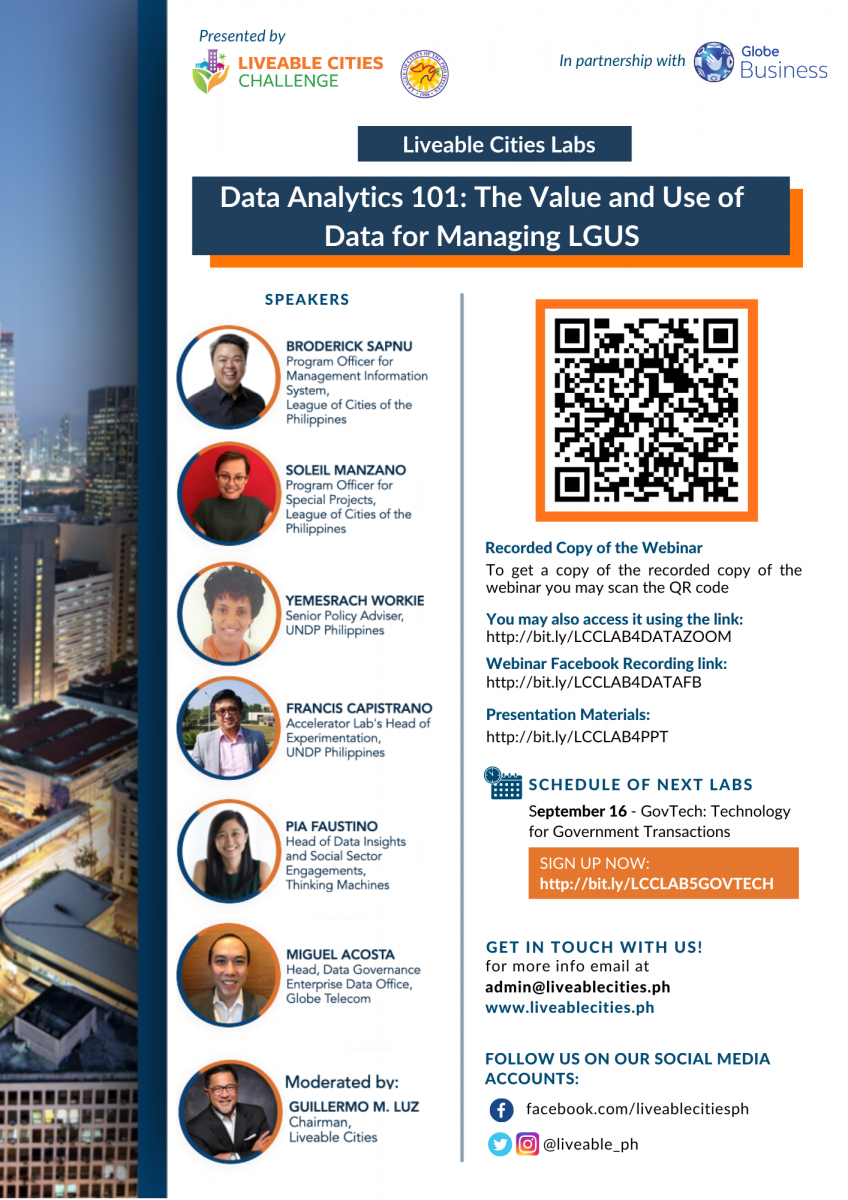
The request highlighted the opening session of the Liveable Cities Labs:  Webinar Series on the topic, "Online Education Under COVID" that was organized by the Liveable Cities Challenge (LCC),  the League of Cities of the Philippines and Globe Business.

Dr. Salustiano Jimenez, acting Director of Region VII of the Department of Education (DepEd), opened the discussion by presenting the current situation of public schools in Central Visayas. Dr. Jimenez said that due to the COVID-19 pandemic, DepEd needs to adjust to new teaching modalities to suit learners, which include modular, online or distance learning, self-learning, blended learning, and homeschooling.  The DepEd urged the LGUs, especially the cities and municipalities, to help create a resilient educational system.

“Aside from giving out tablets and phones, they can help by providing access or connectivity with point to point connection and a wide area network to connect the students and teachers,” Jimenez said.

Dr. Reynato Alimbuyutan of the National Research College in Nueva Ecija echoed Jimenez’s call to the LGUs to ensure that connectivity is assured once schools open on August 24, 2020.

“Support should be given to private schools because we are experiencing the brunt of the pandemic, too. LGUs can help provide internet access because we no longer have the means to do this,” Alimbuyutan explained. 

According to DepEd, only 27 percent of private school students have enrolled back in private institutions, compared to last year, resulting in loss of income and closure of some of these schools.

Due to the pandemic, there is a demand for online learning as DepEd prepares its Basic Education Learning continuity plan that includes allowing schools to decide the use of learning methods depending on the situation where the schools are located. Globe supports these adaptive learning methods, especially online learning that has shown increased retention of information among students,  in the new normal.

“The pandemic has really disrupted education not only in the country but the whole world as well. But rest assured that we are in this together, we are with the education sector in finding ways to help overcome these challenges,” Mark Abalos, Globe Segment Head for Education, said.

Of the 28 million Filipino students, more than nine million are in the secondary level, while more than 8 million are in the primary level, with the rest on pre-primary and tertiary levels.

For its part, Globe said its infrastructure expansion program for the rest of the year remains on track despite the mandated quarantine restrictions. Vince Tempongko, Globe’s VP for Site Acquisition and Management, assured that the company’s network builds nationwide include areas near schools, colleges, and universities. Globe, however, needs the support of the LGUs to fast-track the infrastructure build-up.

“We can do this as soon as the LGUs give us the necessary permits so that we have a pipeline of sites for construction so that Globe can increase its capacity now that connectivity is an essential tool for our students in the new normal,” added Tempongko.

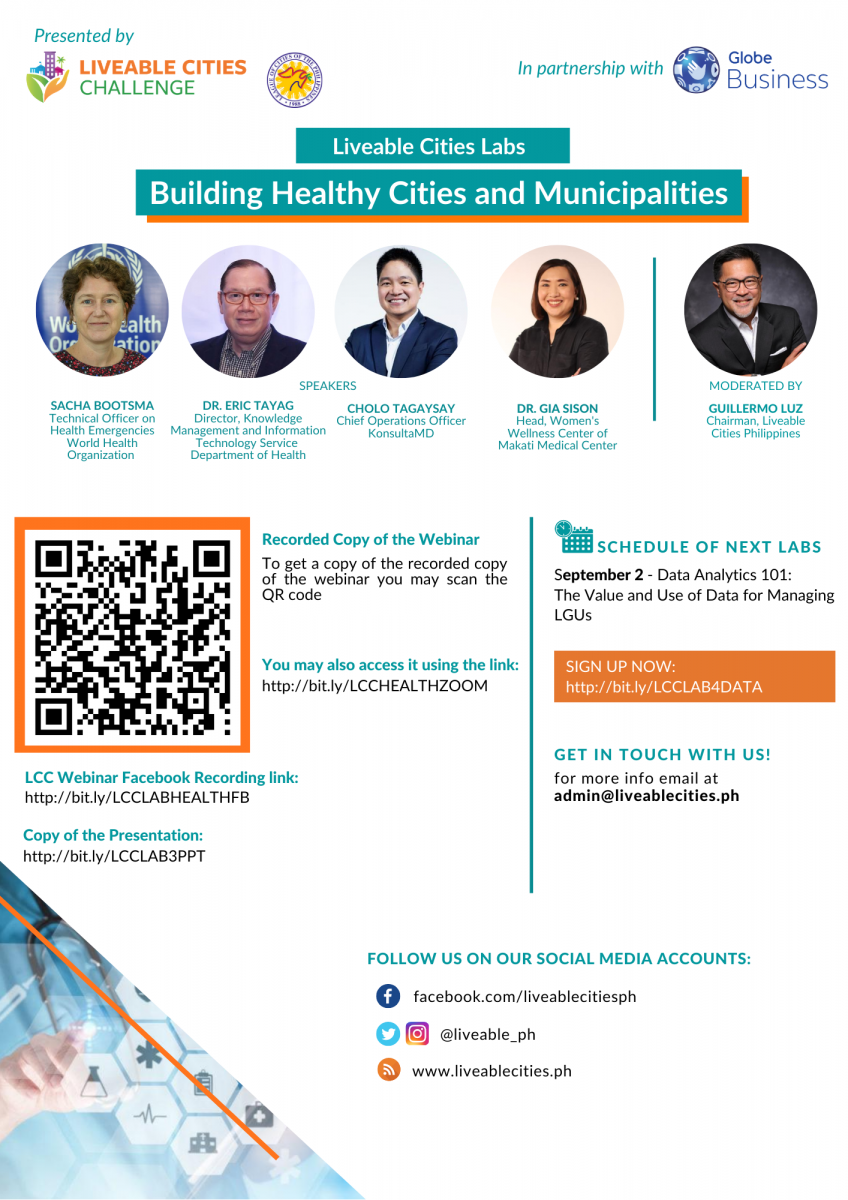
Moderated by LCC Chair Guillermo Luz, the Liveable Cities Lab will be held every other Wednesday in the next seven weeks. The series will feature topics to equip city leaders and stakeholders with knowledge and insights to help them best serve their communities. 

More than 400 participants, including at least 20 mayors coming from different areas of the country, attended the webinar.


Health: Endcov.ph Flattening the curve with the help of data

In mid-March, the country was put into an Enhanced Community quarantine (ECQ). Over time, different parts of the country were declared under Modified Community Quarantine (MECQ) or General Community Quarantine (GCQ). By June 1st, most of the country shifted to GCQ. The shift to GCQ, however, doesn’t mean that the danger of infection has passed. We still need to remain vigilant.  

Liveable cities

Published on June 9, 2020


In mid-March, the country was put into an Enhanced Community quarantine (ECQ). Over time, different parts of the country were declared under Modified Community Quarantine (MECQ) or General Community Quarantine (GCQ). By June 1st, most of the country shifted to GCQ. The shift to GCQ, however, doesn’t mean that the danger of infection has passed. We still need to remain vigilant.  

In light of community quarantine still, in place where people are still required to stay at home,  technology and data can play a big role in combating this pandemic. Technology makes it possible to track the spread of COVID-19 across the country, down to Cities and Municipalities. Such data will help national and local decision-makers make the right public policy decisions to help manage this pandemic.

The University of the Philippines Resilience Institute (UPRI), in collaboration with the UP Nationwide Operational Assessment of Hazards (NOAH), has developed a dashboard that tracks the spread of COVID-19 in the Philippines called ENDCOV PH (http://endcov.ph/). The website aims to provide people with information for tracking the number of confirmed COVID-19 cases, recovered patients, deaths, patients under investigation (PUI, now called Suspects) and persons under monitoring (PUM, now referred to as Probables). 

Endcov.ph features an easy-to-use map and uses a color-coded “heat map” which shows localized areas that have the most (darker areas) and the least (brighter areas) number of confirmed COVID-19 cases.

In order to ramp up data gathering, endcov.ph encourages submissions from Local Government Units. The endcov.ph dashboard also contains information such as a directory of hospitals all over the country, announcements and advisories from the Department of Health and World Health Organization, links for donations, and other resources on health, education, economic support, and mobility policies.

The website can be accessed using this link: http://www.endcov.ph     


Mobility: The Public Transit Challenge under GCQ

As Metro Manila goes into General Community Quarantine starting June 1, the key question will be “will there be enough transportation or mobility options”? As people return to work, will there be enough public transport?

Granted while not everybody will be returning to work – only certain industries and essential services will be allowed to re-start – the answer will nonetheless be No.

Liveable cities

Published on June 2, 2020

As Metro Manila goes into General Community Quarantine starting June 1, the key question will be “will there be enough transportation or mobility options”? As people return to work, will there be enough public transport?

Granted while not everybody will be returning to work – only certain industries and essential services will be allowed to re-start – the answer will nonetheless be No.

Assuming you don’t drive to work in your own car or motorcycle or you live within bicycling and walking distance to work, how long will wait times be? How long will a trip take? How long will each passenger be exposed to risk? We will find out tomorrow.

The public transport options will be extremely limited under GCQ.

LRT-1, LRT-2, MRT-3, and PNR will run but will be limited to 10% to 20% of their capacity. Some buses will run to augment Rail along their routes but will carry only 50% of their normal seating capacity. The rest of the buses will only be allowed to run after June 22. Taxis and ride-hailing services (Grab) will be allowed to run as will tricycles, but all with reduced numbers of passengers. Jeepneys and UV expresses will not be allowed back until after June 22. Motorcycle taxis (Angkas) will not be allowed under GCQ.

The quick back-of-the-envelope calculation of total capacity for Taxis, Ride-Hail Cars (Grab), Buses, and Tricycles for June 1-22 is 1.3 million passengers, one-way. LRT’s 1 and 2, MRT-3, and PNR will add approximately 63,300 seats, per way, as their capacity will be limited to 10% to 20% of normal loads.

After June 22, when you add Jeepneys and UV Expresses to Taxis, Ride-Hail Cars, Buses, and Tricycles, LRT1, LRT2, MRT3, and PNR, the public transit capacity will grow to just under 3.3 million passengers per-way.

Contrast that with the 7.3 million passengers, per way, which the public transit system can carry on EDSA and major Radial and Circumferential Roads in the pre-COVID period, including LRTs 1 and 2, MRT-3, and PNR. The rest of the people ride private vehicles like cars, motorcycles, bicycles, and e-scooters, or walk.

Hopefully, this challenge will force us to re-think and re-imagine our mass transit system. Another subject for another time. In the meantime, get ready for the mass transit challenge.

GCQ will open up some businesses but getting workers and customers to come in remains to be seen.


Download

Dassault Systemes’ 3D Design and Project Management Tools for Cities

University and college students are invited to participate in the Liveable Cities Challenge by joining cities that have signed up for the design challenge and competition. In order to enable the cities in planning and designing their solutions for the Liveable Cities Challenge, Dassault Systemes will be providing design and project management software to students who agree to join city teams.

Liveable cities

Published on February 11, 2020

University and college students are invited to participate in the Liveable Cities Challenge by joining cities that have signed up for the design challenge and competition. In order to enable the cities in planning and designing their solutions for the Liveable Cities Challenge, Dassault Systemes will be providing design and project management software to students who agree to join city teams.

The 3DEXPERIENCE platform is a world-class industry innovation and business platform. It provides software solutions from planning to design to engineering which can help in the creation process and user experiences. It provides access to a catalogue of applications that allow you to design, simulate, inform, and collaborate on a project. With a single, easy-to-use interface, it powers industry solution experience, based on 3D design, analysis, simulation, and intelligence software in a collaborative interactive environment. 

By participating in the Liveable Cities Challenge, university student teams can obtain free access to the 3DEXPERIENCE free of charge. The software is an ideal collaboration tool for Schools/Colleges of Architecture, Engineering, and Urban Planning and other related fields.

To sign up for the challenge, please fill out the downloadable form (http://bit.ly/LCCPH2020Academe) and submit it back to the Liveable Cities Challenge: admin@liveablecities.ph. Upon registration, the university/college point-person will need to submit the names and contact information for individual student team members.

Registration is now open until Feb 15, 2020.

What is the 3DExperience platform? (fun video)


Contact Us Form

CAPTCHA
This question is for testing whether or not you are a human visitor and to prevent automated spam submissions.

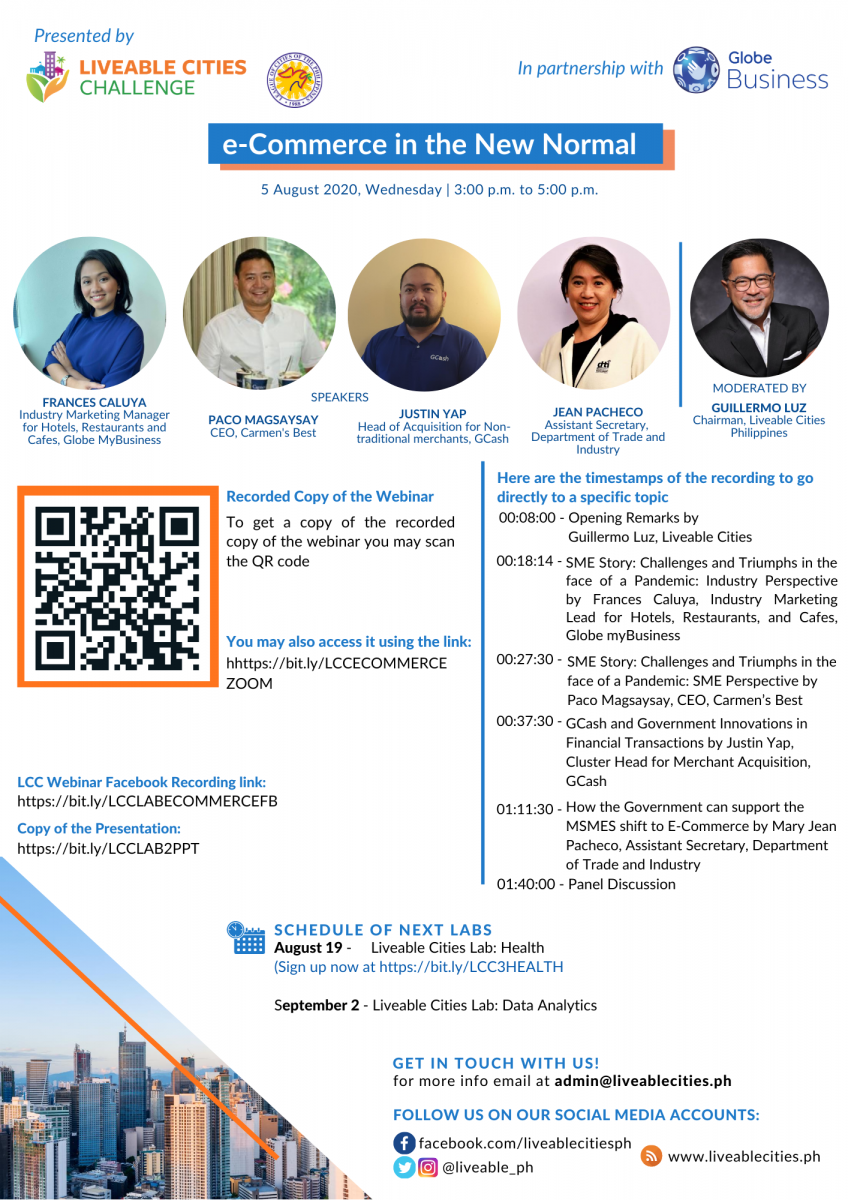
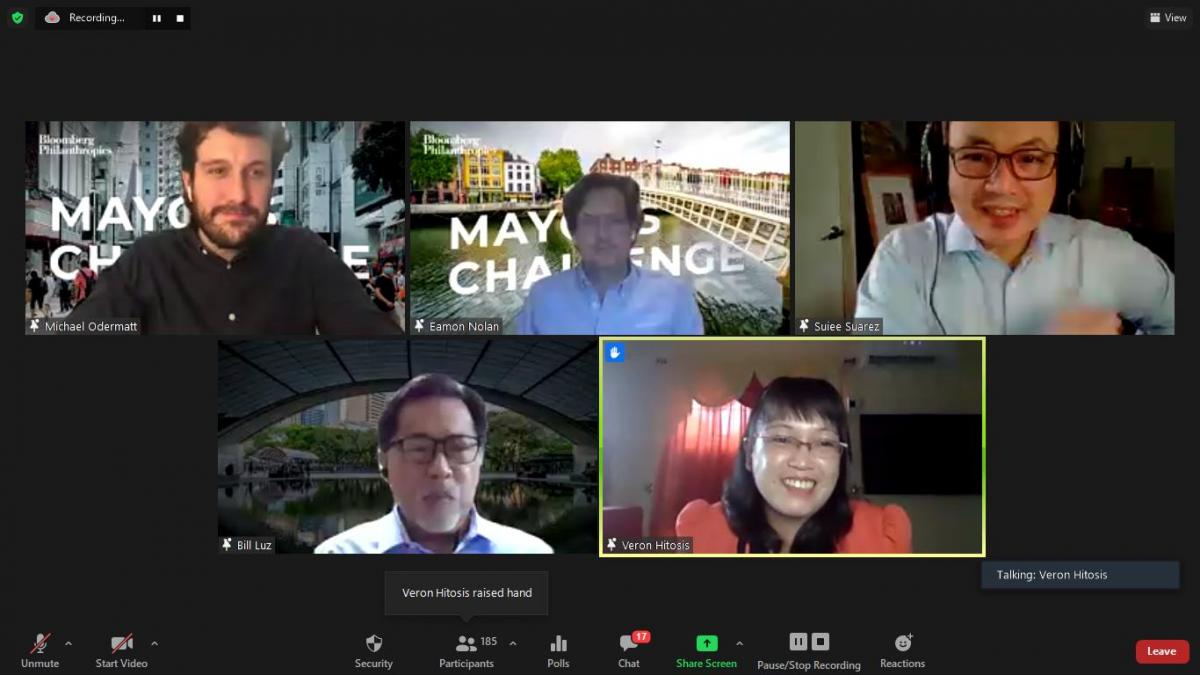
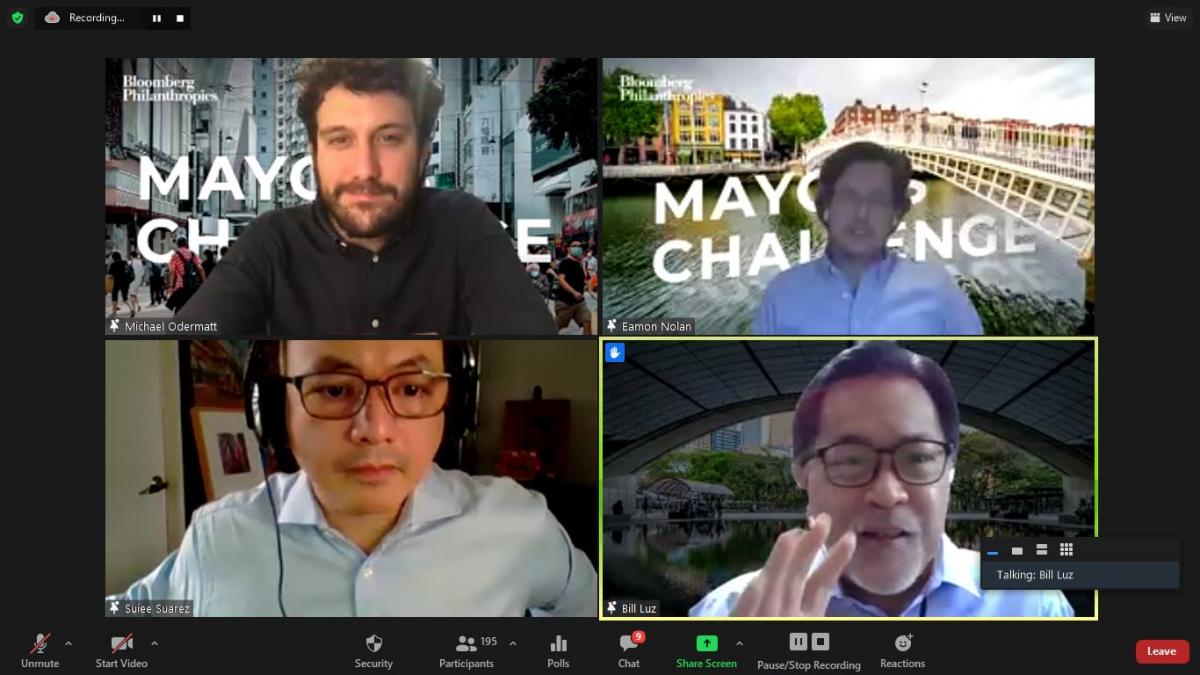
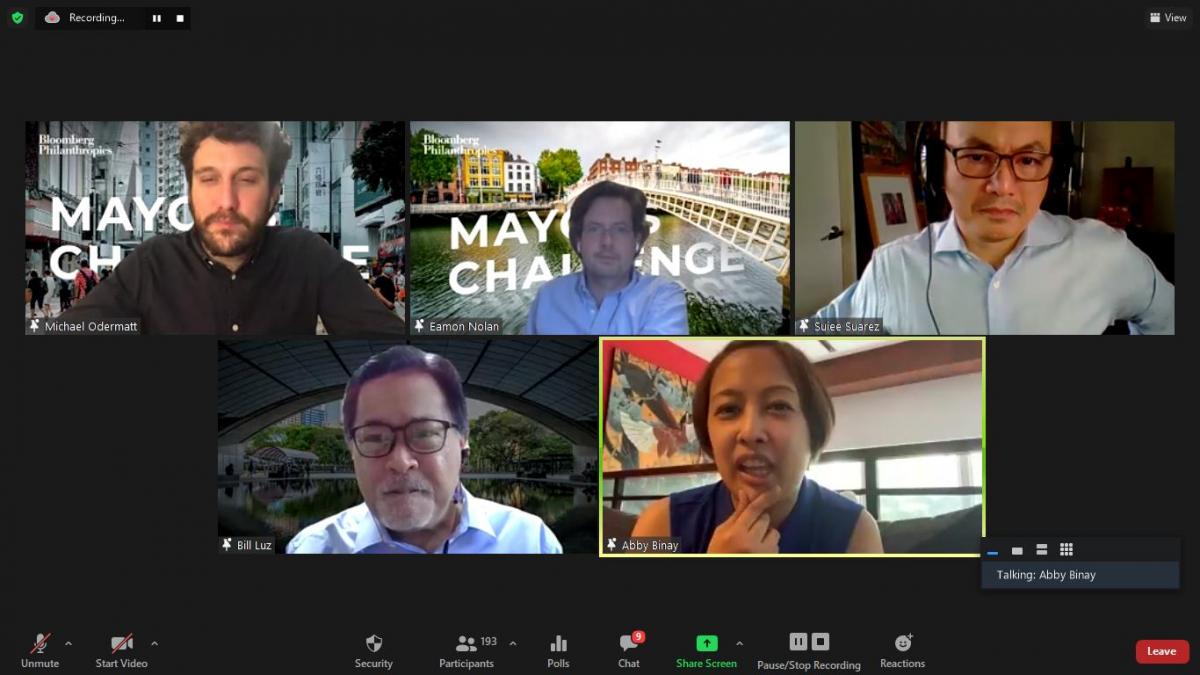
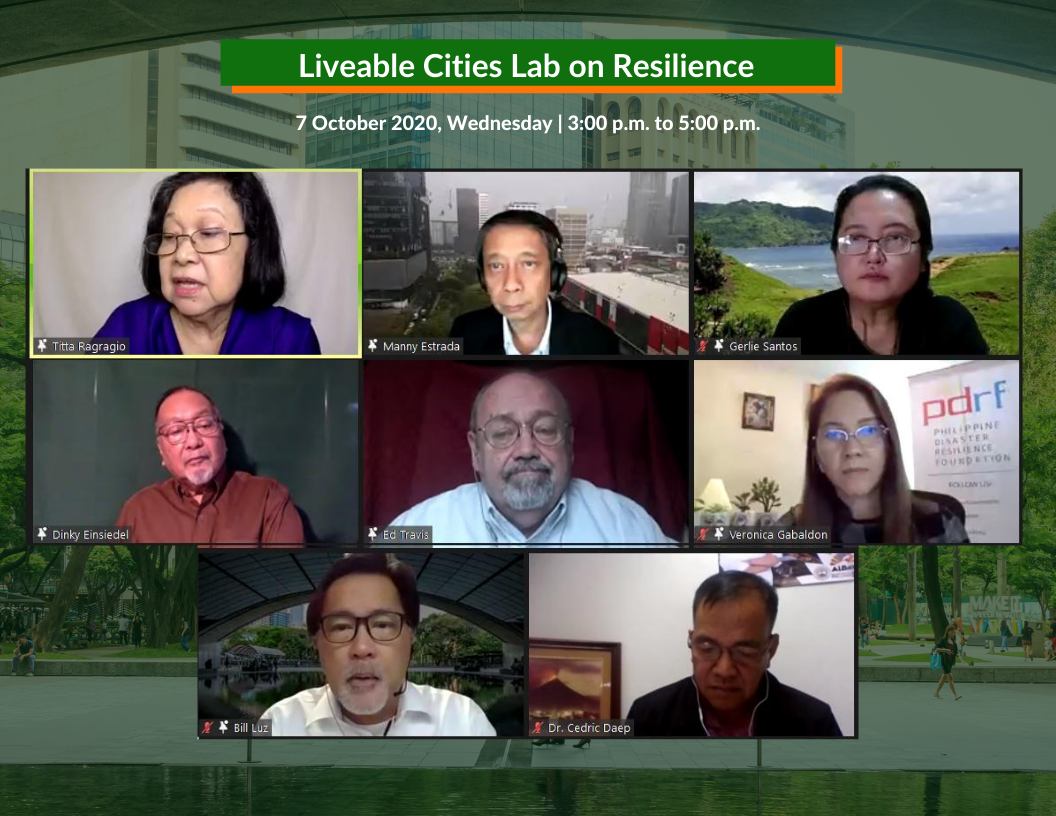
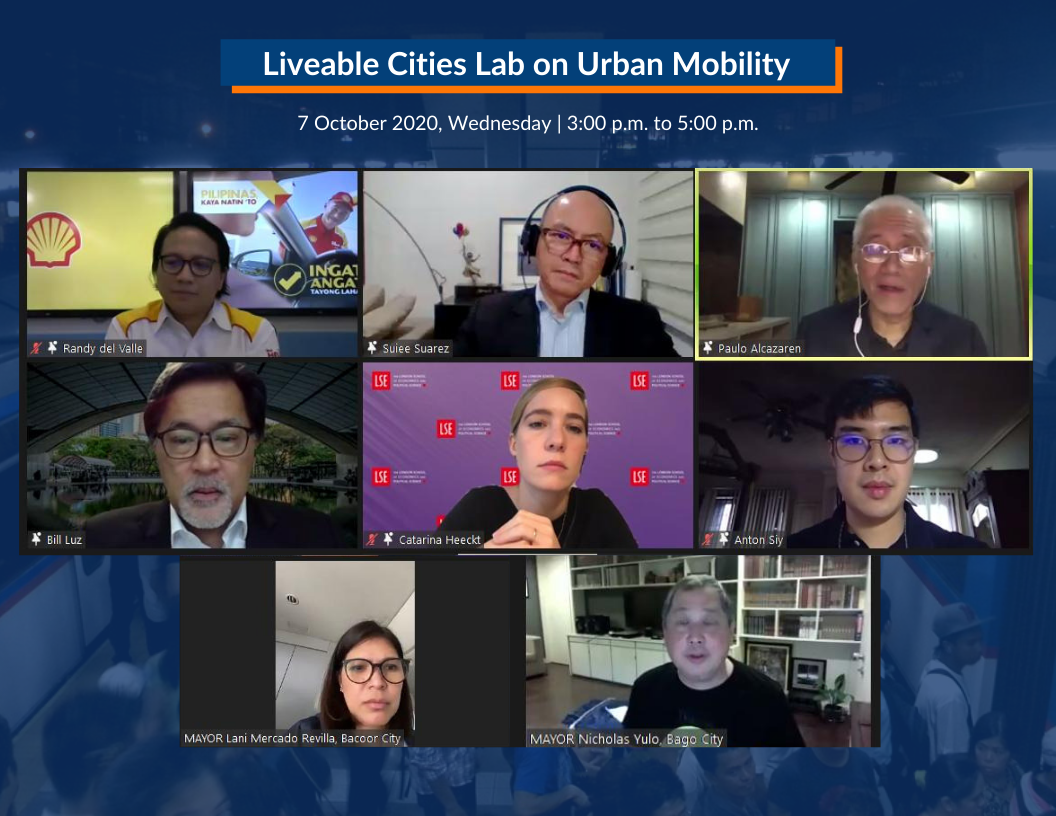
Watch Our Liveable Cities Labs

Watch Now