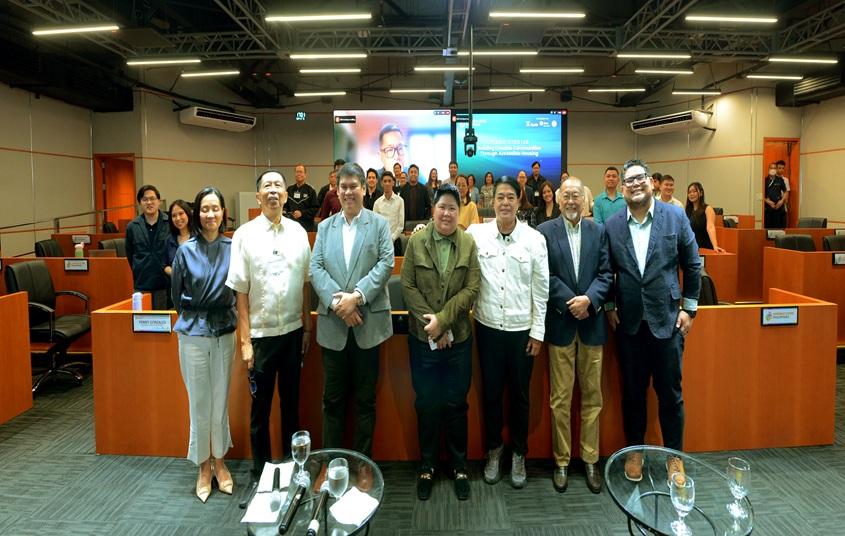
Liveable Cities Philippines recently held its fifth Lab of the year, Building Liveable Communities Through Accessible Housing. The discussion underscored solutions, programs, and local government's initiative on addressing the housing problems in the Philippines. The session also discussed the importance of the public and private sector’s aligned efforts to ensure that the country is closing the housing deficit and backlogs.
Cities are the engine of national growth. They are where ideas take shape, industries thrive, and people come together to build something larger than themselves. When cities work well, they create jobs, attract investment, and spread opportunities that reach far beyond their borders. They are not just places where people live. They are where a country's future gets built.
For the Philippines, this carries particular weight. As an archipelago of regions with distinct strengths, cultures, and needs, we cannot rely on a single urban center to carry the whole economy. Growth that is concentrated in one place will always leave too many people behind. What we need are thriving cities spread across every region, each one capable of generating its own economic momentum and offering its residents a decent, dignified quality of life.
But building cities that truly work for people requires more than infrastructure. It requires deliberate, long-term planning. Many of our cities today are contending with chronic traffic congestion, uneven public services, and the growing risks that come with climate change and disasters. These are not just urban management problems. They have real consequences for productivity, for investment, and for the everyday lives of millions of Filipinos.
Getting our cities right is one of the most consequential investments we can make as a nation. Competitive, sustainable, and resilient cities do not just benefit the people who live in them. They are how we build a Philippines that works for everyone.
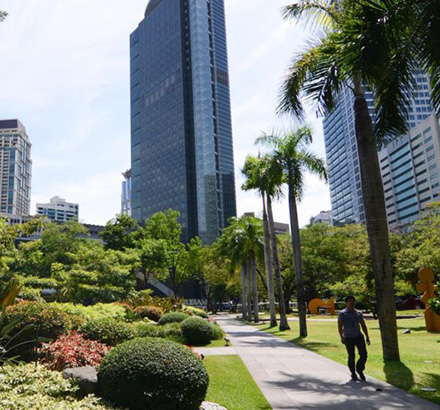
The Philippines has had a spotty record of urban planning. What started out as beautifully master-planned cities generations ago have ended up as cities characterized by congestion and traffic, little or poor access to mass transit, few open spaces, parks, and public spaces, and many blighted and derelict sections. And yet we’ve also seen some areas beautifully-planned and built out in different parts of the country. Whether by design or accident, the parts that have become “liveable” are thriving, booming, and driving growth.
Great cities are not built overnight. But we can get started. Through the Liveable Cities Design Challenge, we help mayors and key local officials develop comprehensive, replicable, and implementable solutions to improve the liveability of their cities, while strengthening local communities in the process. The Challenge’s vision is an accelerated trend towards designing, building, and developing competitive, sustainable, and resilient Philippine cities.


Bayan E-Hub is a forward-thinking platform created to be a central hub for knowledge and resources focused on sustainable urban development in the Philippines. It brings together critical data from various sectors, offering a clear and organized way to understand and improve the quality of life in cities and communities. By compiling and presenting information on population, health, disaster preparedness, education, transportation, connectivity, energy, water, and sanitation, Bayan E-Hub equips individuals, organizations, and leaders with the tools to make intelligent, more impactful decisions.